photo - web

photography - australian - essays - books - collections - asia pacific and more.   photoweb contents page


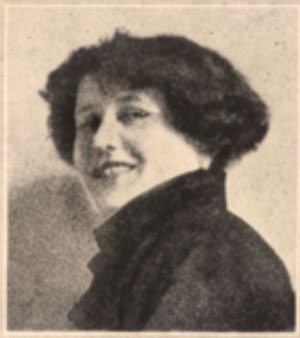
Pegg Clarke

Australian Photographer

Melbourne c.1884 – 1959


Pegg Clarke was a distinguished Australian professional photographer, recognised as a leading figure in Melbourne’s photographic scene during the interwar period - her career peaked during the 1920s and 1930s.

Clarke excelled in society portraiture, children photography, fashion and architectural photography. She was one of the most prominent female photographers of her era, often cited alongside her friend Ruth Hollick.
Her photographs were mainly in a pictorialist style.

Clarke shared a long-term personal and professional partnership with the artist Dora Wilson. From 1923 till 1927 they shared a studio in Linden Hall (403 Glenferrie Road, Malvern). From 1927 until the 1940 they lived and worked at "Rosebank" (476 Glenferrie Road, Hawthorn) opposite Scotch College. They often travelling throughout Australia and Europe to capture landscapes and urban scenes.

 
Sourced Australian Woman's Mirror October 13, 1925

Information above sourced from James McCardle's references mentioned below


Resources

Wikipedia entry - largely by James McCardle

Entry in The Australian Women's Registry

On This Date in Photography, James McCardle 2021: 26th July Partners

A Different Lens: Pegg Clarke, E. G. Shaw and the History of Australian Women’s Photography, Lorraine Sim 2021

Together Again: celebrating the works of Dora Wilson and Pegg Clarke, exhibition 2009: Retrieved from Trove

A Selection of photographs by Pegg Clarke

Pages about Ruth Hollick


Where are her photographs?

No accurate information is available for her date and place of birth; people have speculated that Pegg Clarke was born in Victoria but so far there is no confirmation of this. It is also possible that Pegg Clarke arrived in Australia sometime around the turn of the century - the early 1900s maybe. She was reported as having an accent. That sort of indicates being born maybe in England - but the accent could also be some form of 'well-spoken' Australian accent.

There is a statement in the pamphlet for the 2007 exhibition at the Boroondara Town Hall Gallery (Hawthorn) that 'Her birthplace remains unknown, although evidence suggests strong connections with the Castlemaine area. Perhaps significantly, in 1906, when the young Dora Wilson and the fledgling photographer Ruth Hollick were enrolled at the National Gallery School, a Miss M. Clarke was also among its students.'

For a birth date the best estimate currently is circa 1884. If this is so, and it looks likely, or at least close, then by the time she exhibits in 1915 she is already 31 years of age. There is nothing known that is confirmed about where she learnt or practised photography and where she had been living.

Then there is her archive. It does not exist! There are probably about 50 or so known photographic prints. She did a lot of portraits of people in the social circles, the arts and children. These photographs would go home with the customer but where are the plates?

There are reports of her having several exhibitions in her studio of outstanding work and the numbers being over a hundred in each. Where have they all gone? Given she was working for a couple of decades at least, there should have been heaps of plates somewhere.

The National Gallery in Canberra has 9 photographs online.
The State Library of Victoria has about 22.
Castlemain Art Museum has 2 .
The National Gallery of Victoria - none listed.
The Art Gallery of NSW has one listed.
Scotch College Archives: There are reports of photographs in the Scotch College Archives, the school across the road from where Pegg Clarke lived at Rosebank. The school magazine, The Scotchman, commissioned photographs with some being identifed by the archivist Dr Jim Mitchell as most likely Pegg Clarke's portraits of staff, prefects and significant campus events.

There is nothing in her will about her archive. No one has identified any relative holding a mass of glass plates and boxes of prints in a backroom cupboard or in the attic. Did she or someone else destroy them once they moved from their studio in Hawthorn?

She is not the only artist of this era, being the 1920 - 1930s, whereby the archive is unknown and the legacy is a small number of works when compared with what should be expected given the decades of successful work.

Lorraine Sim talks about this issue in her 2021 paper listed above...

See the bottom of the page of Selected Photographs for a catalogue of 104 photographs for sale in 1932.


photo-web table of contents


photo-web contents page       or      Search photo-web

to make contact : click here - to use our online contact form

photo-web  /  asia-pacific-photography-home   /  Paul's Blog   /   Gael's Blog   /   Gael's papers /  about us

SEARCH       contacts - copyright notice - sharing information - permissions - other stuff