photo - web

photography - australian - essays - books - collections - asia pacific and more.   photoweb contents page

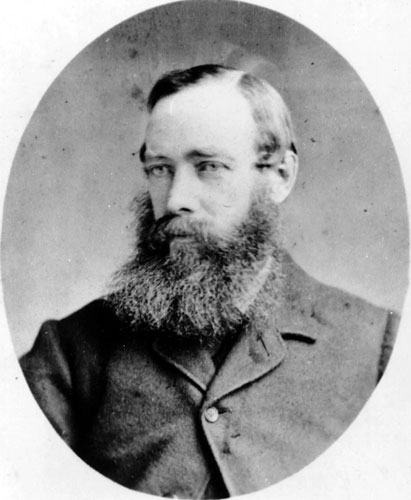
Richard Daintree

Geologist and Photographer    1832–1878

England 1832–1852,    Australia 1852–1856
England 1856/1857,     Australia 1857– 1871,     England 1871–1878

Richard Daintree (1831–1878) was a pioneering geologist and photographer who played a significant role in the early documentation and promotion of Australia, particularly Queensland.

Born in Huntingdonshire, England, in 1831, he was a farmer's son who attended Christ’s College Cambridge before leaving for the Victorian goldfields in 1852. He joined the Geological Survey of Victoria in the mid-1850s. He later served as the government geologist for North Queensland starting in 1867/1868.  He returned to England in the mid-1850s to study at the Royal School of Mines Laboratory and it was around this time that he took up photography.

Daintree pioneered using the camera as a tool for geological fieldwork and was one of the first to use photography for large-scale promotion.


In 1857, he partnered with Antoine Fauchery to publish photographic albums titled Australia, and they opened a studio in Melbourne in 1858. His work included important early images of Victorian Aboriginal people. exhibitions of Geological Survey photographs and mineral samples.

In 1864, he took up pastoral leases near Townsville and formed a partnership in Maryvale station. In 1872, he was appointed Queensland’s Agent-General in London. He used his photographs and mineral samples at international exhibitions in London, Vienna, and Philadelphia to promote emigration to Australia.

Although the Daintree area was named after him in 1873, he never actually visited the region. He resigned from his position as Agent-General in 1876 due to health issues and was created a CMG (Companion of the Order of St Michael and St George). After wintering in France for his health, he died in June 1878 in Beckenham, Kent, and was buried near Cambridge.


much of the above text was sourced from the Douglas Shire Historical Society (Queensland)
and the Dictionary of Australian Artists, editor Joan Kerr.


Special photographic collection

Richard Daintree produced photographs of landscapes, geological formations and people from across Queensland in the 1870s. These are particularly focused on mining and agricultural endeavour in the north of Queensland. His photographs were exhibited in the Queensland displays at 10 international exhibitions from 1871 (London) to 1897 (Brisbane). A selection of photographs was also shown in the Queensland Court at the Sydney International Exhibition, 1879-1880.

The Queensland Museum in Brisbane holds a collection of over 200 photographs, including overpainted Albumen prints mounted on boards that were used overseas in exhibitions mentioned above. A small number are also held at the National Library of Australia in Canberra.

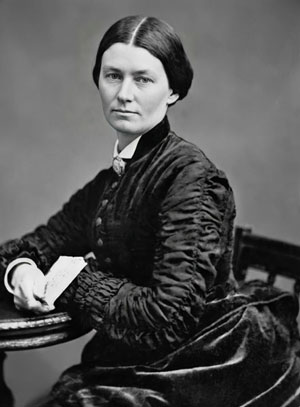
Lettice Agnes Daintree

Richard Daintree married Lettice Agnes Foot on 1 December 1857 in Melbourne, Victoria. Lettice was the daughter of Henry Foot, a surveyor of Brighton.

The couple later moved to Queensland and then moved to England when Richard Daintree Queensland’s Agent-General in London. They had a family of eight children, consisting of two sons and six daughters. Lettice survived her husband, who died of tuberculosis in in England in 1878.

Lettice was born 20 Jul 1837 in Hythe, Hampshire, England and died 26 Oct 1915 at age 78 in Tiverton, Devon, England.


Richard Daintree's Chronology

1831: Born Huntingdonshire, England
1851: Educated at the University of Cambridge, UK
1852 - 1854: Gold prospecting in Victoria
1854 - 1855: Geologist, Geological Survey of Victoria
1856 - 1857: returned to UK - Studied assaying and metallurgy, Royal School of Mines, London
1857: Returned to Victoria
1858: Formed studio partnership of Fauchery and Daintree, photographers, established in Collins St, Melbourne
1859 - 1865: Geologist, Geological Survey of Victoria
1862 - 1868: Partner with Hann family in pastoral property in Burdekin district, Queensland
1864: Richard Daintree moves his family to Queensland - at Maryland with the Hann Family
1868 - 1869: Geological Surveyor for the northern part, Queensland Public Works Department
1871: Commissioner in charge of Queensland's contribution to the 1871 Exhibition of Art and Industry, London
1872: Moved to United Kingdom
1872 - 1876: Agent-General for Queensland
1878: Dies Beckenham, Kent
1878: Companion of the Order of St Michael and St George (CMG)


Richard Daintree's photographic equipment

Richard Daintree famously used a Sutton panoramic camera equipped with Sutton’s achromatic panoramic lens for many of his iconic landscape and field photographs.  This pioneering equipment included a 76 mm wide-angle lens patented by Thomas Sutton in 1859. The lens was unique in that it was made of a hollow, globular shell of flint glass filled with water, which produced a 140-degree field of view on curved glass wet-plate negatives.

For portraiture and group studies, especially during his collaboration with Antoine Fauchery on Sun Pictures of Victoria (1858), Daintree used a Petzval lens. This lens was designed by the Viennese scientist Joseph Petzval and was highly regarded for portraiture because it provided sharp focus on the subject, diffused focus on the background, allowing the subject to stand out in relief.  Both lenses were used with the wet collodion process.


Richard Daintree's photographic Process

Richard Daintree used the collodion wet-plate process to produce his detailed and often large-format, photographs of 19th-century Queensland, Australia. Working with Antoine Fauchery in Melbourne, Daintree created albumen silver prints, notably for their "Sun Pictures of Victoria" collection in 1858.

Daintree used the Wet Collodion Process. During the 1860s in North Queensland, Daintree operated in difficult, remote conditions using this method to create glass plate negatives. For his exhibitions in London in the 1870s Daintree commissioned large-scale enlargements using the autotype (carbon) process. Many of his photographs especially those used for promotional purposes to attract immigrants to Queensland were albumen prints that were subsequently painted in oils.


The collodion wet-plate process

The collodion wet-plate process is a 19th-century photographic method invented in 1851 by Frederick Scott Archer that requires coating, sensitizing, exposing, and developing a glass or metal plate within 15 minutes while it remains moist. It produces high-quality, detailed negatives or, when on black metal, direct positives (tintypes).

Its major constraint is that the entire process must be completed before the ether and alcohol in the collodion evaporate, giving photographers roughly 10–15 minutes from sensitization to development.

The creation of a collodion wet-plate  first involves a glass or metal plate is coated with collodion containing iodide and bromide.
To be Sensitized, the plate is dipped into a silver nitrate bath, creating light-sensitive silver iodide, and loaded into a light-tight holder.

Importantly for the exposure to work, the plate is exposed in the camera immediately, often requiring long exposure times.
Immediately following the exposure, the plate is developed, fixed (usually with sodium thiosulfate or potassium cyanide), washed, and finally varnished to protect the fragile image.

Because of the need for immediate processing, 19th-century photographers required portable darkrooms or tents in the field.
The process, despite its shortcomings, allowed for much shorter exposure times than earlier methods and produced a negative, enabling multiple paper print copies, unlike the unique, single-image daguerreotype. The results included: 

Glass Negatives: Used to make albumen prints.
Tintypes (Melainotypes): A positive image on a thin, black-lacquered iron plate.
Ambrotypes: A positive image on glass, backed with black material.

The process dominated photography from the early 1850s until it was superseded by the dry plate process in the 1880s.


Daintree was pioneering in using photography to document geological features and early settler life in Queensland, overcoming the technical difficulties of the wet-plate process in the Australian bush.


Return to Daintree main page with resources links


photo-web contents page       or      Search photo-web

to make contact : click here - to use our online contact form

photo-web  /  asia-pacific-photography-home   /  Paul's Blog   /   Gael's Blog   /   Gael's papers /  about us

SEARCH       contacts - copyright notice - sharing information - permissions - other stuff