|
The Carte de Visite - CdV
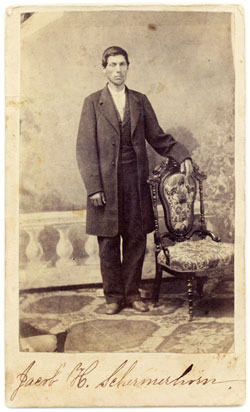
The carte de visite (CdV) is the small photograph (6.4 cm x 10 cm) that revolutionized portraiture in the mid-19th century. The CdV was patented in 1854 by the French photographer André-Adolphe-Eugène Disdéri. This new format turned photography from an expensive luxury into a mass-market phenomenon.
A standard CdV consisted of an albumen print mounted on card. Roughly 6.4 cm x 10 cm (2.5 x 4 inches), similar to a modern calling card or business card. Photographers used a multi-lens camera that could take up to eight exposures on a single glass plate, lowering the cost per image.
Resources
A Special Collection of Australian CdVs (sold)
The Women of Adelaide in CdVs
A sample of Duryea's carte de visites
Duryea's Cdvs in the Hanson Albums
August Sachtler CdVs
Carte–O–Mania: An exhibition at the National Portrait Gallery in Canberra focussed on the Carte-de-Visite.
A special collection of Japanese photographs, many of them being CdVs
Return to contents page
|