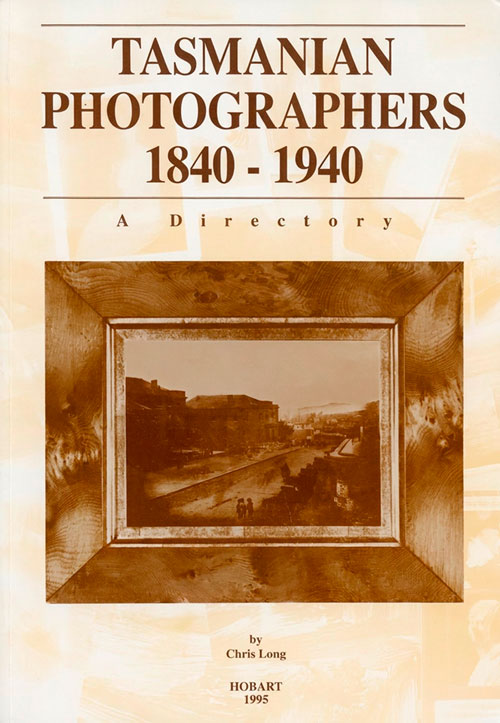
Chris Long’s Tasmanian Photographers 1840–1940: A Directory is a biographical and bibliographical resource on early Australian photography. It was published in 1995 by the Tasmanian Museum and Art Gallery (TMAG). The publication is a technical and social history of the medium's first century in Tasmania.
The book is structured primarily as an encyclopedic directory, and includes extensive introductory essays that provide context for the era. There are entries for over 600 photographers, ranging from professionals like John Watt Beattie and the Spurling family to obscure amateurs and itinerant "travelling" photographers.
The publication covers the century from the arrival of the first daguerreotypists in the 1840s to the cusp of the Second World War. While Hobart and Launceston are central, Long tracked the movement of photographers into the rugged West Coast mining towns and the agricultural regions of the North West.
Long spent years cross-referencing newspaper advertisements, census records, and post office directories to identify the creators of unsigned prints. This allowed galleries and private collectors to finally attribute thousands of historical images to their rightful makers. The publication provides deep insight into the chemical and physical processes used in Tasmania. Long describes how the island’s isolation influenced the adoption of new technologies:
Long treats photography as a social trade. He documents: The rise of the "Studio Portrait" as a status symbol for colonial families; The role of photography in scientific expeditions and the documentation of the Tasmanian Aboriginal people; The transition of photography from a specialized, expensive craft to a popular hobby following the introduction of the Kodak Brownie.
The book's legacy lives on through the Tasmanian Museum and Art Gallery and the State Library of Tasmania, which use Long’s research as the foundational framework for their digital archives.
Chris Long is a pivotal figure in Australian photographic history, specifically for his exhaustive efforts to document and preserve the visual heritage of Tasmania. His research on the period between 1840 and 1940 transformed the understanding of Tasmania as a significant hub for early colonial photography.
Return to Books
Return to photo-web contents page