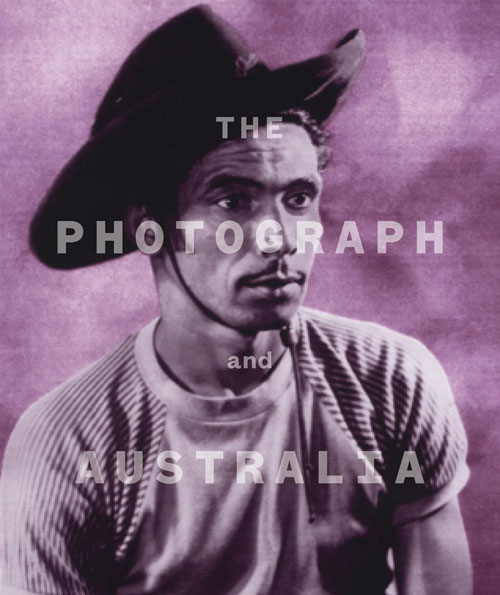
The Photograph and Australia authored by Judy Annear and published in 2015 alongside a major exhibition at the Art Gallery of New South Wales, is a seminal survey of the medium’s history in Australia. Rather than a standard chronological list of "greatest hits," it explores how photography has shaped the national identity, recorded colonial expansion, and evolved into a sophisticated contemporary art form. The exhibition and the accompanying book were divided into several core investigations:
Time and Light: Exploring the scientific origins and the archival nature of the medium.
Nation and People: Examining the role of photography in settler and Indigenous relations.
Place and Transmission: Looking at how images traveled to construct a global image of Australia.
While it included contemporary works (such as those by Tracey Moffatt and Ricky Maynard), the project was heavily weighted toward the 19th century. It brought renewed scholarly attention to early practitioners like Richard Daintree, Charles Bayliss, and JW Lindt. The exhibition was notable for its dense "salon-style" presentation, which aimed to mimic the experience of a historical archive rather than a traditional art gallery.
The book remains a vital reference, featuring essays from prominent scholars such as Jane Lydon, Geoffrey Batchen, and Daniel Palmer. It built upon the foundations laid by earlier definitive works like Gael Newton's Shades of Light: Photography and Australia 1839–1988.
For those interested in the transition from traditional to modern styles, the exhibition provided a critical counterpoint. It often displaced the 1930s (Modernism) and the 1970s (the "renaissance" of Australian photography) from their usual central positions to show how they fit into a much longer, more complex visual history—one that includes European influences like the Bauhaus school alongside local developments.
Back to Books
Return to photoweb contents page